Muay Thai History Tag
Muay Thai History Indicator

Muay Thai History - Everything about the history of Muay Thai

Introduction | Muay Thai History | Muay Boran | Muay Boran Techniques | Muay Boran Rules | Muay Boran Heroes | Renaissance

Muay Thai History: Introduction [top]

history_pic1Muay Thai is a martial art which is being practiced around the whole world. The history of Muay Thai is long and rich as the sport played an important role in Thai culture throughout the history of the country. The current form of Muay Thai differs considerably from the traditional form, Muay Boran. This form relates closely to other traditional martial arts coming from South East Asia, like Pradal Serey from Cambodia, Lethwei from Burma, Tomoi from Malaysia and Lao boxing from Laos.

Muay Thai is often referred to as "the art of the 8 limbs" by the Thai people due to the use of hands, shins, elbows and knees, which are all weapons in the arsenal of a Muay Thai fighter. So a practitioner of Muay Thai has 8 contact points available which can all be used to attack the opponent. In traditional western boxing, however, there are just two contact points (hands) and in most other martial arts, a fighter has 4 contact points available, namely hands and feet.

Muay Thai History [top]

The Thai culture has been strongly influenced by the old civilizations that dominated South East Asia throughout the centuries. The origins of Muay Thai are unclear as the scriptures on this subject have been lost during the raid of Ayutthaya by the Burmese army. One theory is that the martial art came along with the Tai people from China, who settled in Thailand. Another theory is that Muay Thai has been copied and altered from the old Khmer martial arts during the time that Khmer, Cambodia today, dominated large parts of South East Asia. During this period, the Thai culture was majorly influenced by the powerful neighboring country. The one thing that is certain is that Muay Thai is evolved from Muay Boran. Muay Boran was practiced by soldiers of the Siamese army (Siam is the old name of Thailand). It is known that every region had its own Muay Boran style. This is reflected in the old saying: Punch Korat (East), Wit Lopburi (Center), Posture Chaiya (South), Faster Thasao (North). (หมัดหนักโคราช ฉลาดลพบุรี ท่าดีไชยา ไวกว่าท่าเสา).

Muay Thai History: Muay Boran [top]

history2The first reference made to a Thai fighting system in the Muay Thai history, was the mentioning of a style called Muay Chaiyuth. There is not much known about this ancient form, but what is known is that during the Sukhothai-period, this style was replaced by a fighting style called Muay Chaiya. Until today, this style is the oldest form of unarmed combat known in Thailand and is still being practiced today. The style which is known as “Muay Boran” originated after a series of raids by the Burmese army into Thailand. King Ramathibodi moved his capital to the former Khmer strong hold of Ayutthaya. Here he had his army trained in armed and unarmed combat. Because Muay Boran was originally developed for use on the battlefield, all techniques were designed to inflict maximum damage onto its opponents. Punches and kicks within Muay Boran were designed so that they would break or shatter bones in one single strike. Next to punches, kicks, elbows and knees techniques used in Muay Boran, there are also arm and leg locks and strangulations.

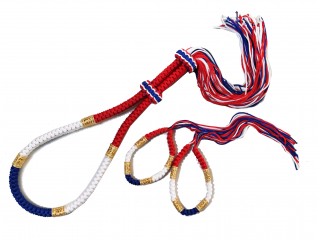
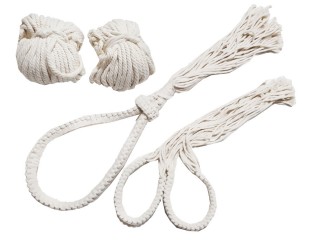
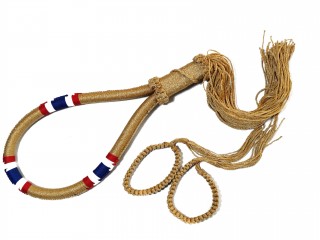
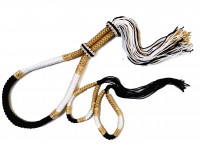
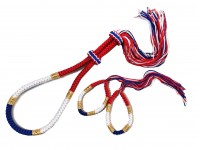
Besides being used as a form of unarmed combat, Muay Boran developed itself into a martial art in which Thai men could test their skills in unarmed combat against others. Large crowds would form to watch the fighters go toe to toe against each other. Like with many other Asian martial arts, the monks took on the role of instructors (Khru), like for example the famous Shaolin monks from China. The Buddhist monks also added some spiritual elements to the sport. During festivities, Buddhist temples started organizing fights to entertain the people. Given the fact that ever self respecting Thai man is expected to spend some time living in a temple at some point in his live, the sport rapidly gained in popularity. Up to a point where it was considered normal that any Thai male would be able to defend himself by using Muay Boran. Initially, the fighters who took part didn't use any form of protection and would fight bare-handed. After some time, it became standard practice for a fighter who was taking part in Muay Boran fights to wrap his fists and forearms with hemp robe. Fights like these wouldn't be held in an official ring but just in an open space. The size of the “ring” wasn't marked by ropes, but just by the space given by the spectators.

Throughout the years, Muay Boran became so popular that the fights would become an integral part of any temple or village fair held in the Kingdom. Fights were even organized within the walls of the royal palace to entertain the royal family. Muay Boran also became a way for young men to advance their social status. The nobility in the Kingdom were trying to impress by linking the most skillful fighters to their name. Fighters were even invited by the royal family to teach Muay Boran to the princes. During the Ayutthaya period, a Muay regiment was formed to serve as personal body guards to the Royal family. They were known under the name Grom Nak Muay. The royal patronage was continued during the reign of King Khun Luang Sorasak, better known as the Tiger King. There are records dating back to that period which referenced to his passion for the art of Muay. There are stories which state that the King would sneak out of the palace disguised as a commoner so that he could take part in fights at local fairs and festivals. That way he would be able to test his skills against the best fighters in the Kingdom. Disguise was the only option because if they knew who he really was, no men would dare to raise his hand against the King.

Muay Thai History: Muay Boran Techniques [top]

history3In Muay Boran, the legs are wider apart and the standard fighting position is much lower than in Muay Thai. It is comparable with traditional martial arts from China and India. Muay Boran requires speed, flexibility and agility from the fighter. He could, for example, punch the opponent on the head by using the opponent’s knee to jump up.

Because of its technique, Muay Boran is very effective in causing considerable damage to the opponent. It is very effective as every attack could result in broken bones or even death. The most remarkable thing about Muay Boran is the focus on the powerful elbow and knee strikes. This with the intention to knock out the opponent as quickly as possible; the next opponent on the battlefield could already be on his way!

Muay Thai History: Muay Boran Rules [top]

In the old Muay Boran rules for fights in the ring, the following attacks were prohibited: punches in the crouch, attacking an opponent who has already been floored, pulling hairs and biting. Weight classes were non-existent and there was no specially built ring. Instead of in a proper ring, fights took place in open areas in the midst of a circle of spectators. The duration of one round was calculated by placing a coconut in the water with a small hole in it. When the coconut sunk, someone sounded the drum to indicate the end of the round. Yet another Muay Thai history fact!

Muay Thai History: Muay Boran Heroes [top]

During the fall of the ancient Siamese capital city, Ayutthaya, in 1763, many groups of civilians, including large group Thai boxers, were taken as prisoners to the Burmese city of Ungwa. In 1774, the Burmese King, Hsinbyushin, which means “King Mangra” in Thai, decided to organize a religious festival in the city of Rangoon in honor of Buddha. This festival lasted for seven says and seven nights and consisted of several kinds of entertainment, such as traditional Burmese plays (also called Likay), comedians and traditional Burmese sword fencing events. At some point, the King wanted to see how Muay Boran compared to the Burmese style of boxing, Lethwei. One of the Thai boxing prisoners, Nai Khanom Tom, captured by the Burmese in Ayutthaya, was chosen to face the Burmese champion. The ring was set-up right in front of the throne of the King and before the fight started, Nai Khanom Tom performed the Wai Khru (Ram Muay), which is a traditional thing to do for Thai boxers before the start of each fight. By doing so, he showed respect to the King, spectators and of course his teacher. This was never witnessed before in the history of Burma. All the spectators, including the King, were deeply impressed by this symbol of respect.

When the fight started, he attacked his opponent by using punches, kicks, elbows and knee strikes. He kept on going until his opponent dropped on the floor and was not able to stand up anymore. However, the referee decided that the Burmese fighter was too distracted by the Wai Khru and the KO was declared invalid. In order to prove that the Wai Khru was not used to distract the opponent, the King requested Nai Khanom Tom to fight nine Burmese champions. He accepted the challenge and fought them one by one, without resting in between the fights. His last opponent was a well-known boxing teacher from Ya Kai. Nai Khanom Tom crippled him with his devastating kicks; nobody dared to fight him again.

muaythaihistoryKing Mangra was so impressed that he made the following remark: “Every part of this Thai is blessed with poison. Even with bare hands he can knock down nine or ten opponents. But his leader lacked ability and lost his country to his enemy. If he was a competent leader, it would have been impossible to take over the city of Ayutthaya”. King Mangra offered Nai Khanom Tom his freedom and made him choose between gold and two beautiful Burmese women. Nai Khanom Tom picked the women and said to the King: “Wealth is easier to find than a good wife”, after which he left to Siam (Thailand). In other versions of the same story, he also secured the release of his fellow Siamese prisoners, but this seems unlikely. Nai Khanom Tom’s good deed are still remembered and celebrated on the 17th of March, which is also known as “Boxing Day” or “National Muay Thai Day”.

Nowadays, some have incorrectly attributed Nai Khanom Tom’s legend to King Naresuan, who was also a Burmese prisoner. However, both lived almost two centuries apart.

Muay Thai History: Renaissance of Muay Boran (Muay Thai) [top]

The ascension of King Chulalonkorn (Rama V) in 1868 was not only the start of the golden century for the Muay history, but also for Thailand in its entirety. During the reign of King Rama V, Muay developed considerably. This was a direct result of the personal interest that the King took in the martial art. Peace was ruling the Kingdom and Muay served as a way of self defense, recreation and a way of promotion. Masters of the martial art, like former fighters and soldiers, started to teach Muay in training camps. That was a place where food and shelter was provided for the students so that they could fully focus on learning Muay. It became a tradition to take on the name of the camp where they were living as their last name.

After a fatality in the ring, King Rama VII urged for the implementation of a set of formal rules for Muay Thai fights held within the Kingdom. One of the new implemented rules was the obligation for fighters to wear a pair of modern boxing gloves and to wear a pair of cotton socks over feet and ankles. During this same period, around 1920, the name Muay Thai was given to the new form of Muay. Since then, all older forms were referred to as "Muay Boran”.

Hungry for more after reading about Muay Thai History? Please take a look at our Muay Thai Techniques page!